1) Construction gypsum
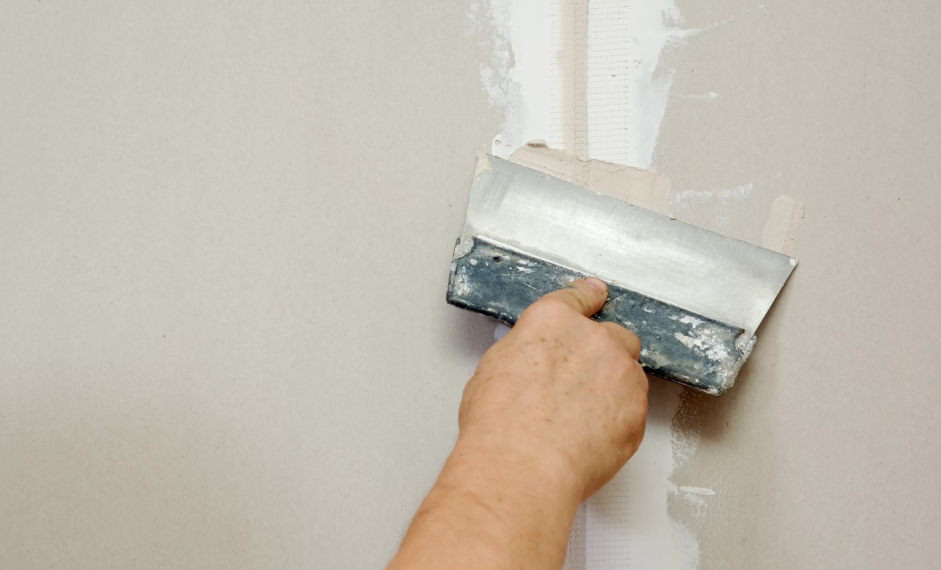
Building gypsum mainly comprises β-hemihydrate gypsum (β-CaSO2-l/2H2O), which contains a small amount of in-type anhydrite and dihydrate gypsum. It has fast-setting properties, good plasticity and adhesion, and no shrinkage of a hardened body. Therefore, it is an ideal cementitious material for caulking between gypsum board panels.
2) Retarder
The role of the retarder is to prolong the setting time of the gypsum so that the caulking putty has enough usable time. Many types include inorganic salts (Na2SiO2, K2SiO3, Na2CO3, Na2B4O7- 10H2O) and soluble organic compounds (glycerin, alcohol, tartaric acid, citric acid, malonic acid, succinic acid, and their salts). Although a set retarder is usually used alone, it is necessary to increase the dosage to achieve sufficient setting time. This is because some inorganic salts will produce bleeding when the dosage rises and the strength of gypsum reduces.
It is significantly reduced, so powdering, surface coating detachment, hollowing, peeling, and other ills occur. Therefore, it is necessary to select an appropriate retarder for compound use.
3)adhesive
The adhesive used for caulking gypsum powder should be water-soluble or water-swellable. Its types include
- animal and vegetable adhesive (soluble starch, bone glue),
- organic polymer compounds (polyvinyl acetate, Redispersible Polymer powder material), and
- blended or modified products of the two.
Generally, animal and vegetable adhesive are prone to mildew and affect the performance of putty, while organic polymer adhesives are more expensive. However, they dissolve quickly in water and do not agglomerate when stirred, which can improve the plasticity of gypsum, improve brittleness and crack resistance, and make it embedded. As a result, the seam putty has sufficient bonding strength.
Its primary technical performance meets the following requirements: it is an adhesive material that can be dispersed in water and does not agglomerate so that the adhesion test between the gypsum putty and the joint tape meets the standard requirements.
nd the joint tape meets the standard requirements.
4) Water retaining agent (thickener)
The water-retaining agent (thickener) forms a colloidal solution with water, making the water difficult to volatilize or be absorbed by the base layer, ensuring the moisture required for the hydration of the gypsum, and playing the role of water retention. At the same time, adjust the viscosity of the gypsum putty so that when the putty is embedded in the gaps between the boards, it will not be complete due to drooping and the filling will not be full, and cracks will not quickly occur. However, adding such products may reduce gypsum’s strength and delay gypsum’s hydration process. Therefore, the selection and dosage of water-retaining agent (thickener) must be appropriate to maintain a good comprehensive performance of putty. Commonly used are water-soluble cellulose derivatives and modified starch.
5) Surfactant
Surfactants can reduce the surface tension of water and play a role in wetting and dispersing the components of caulking putty. They are soluble in water because the affinity between the hydrophilic part and water is greater than the repulsion between them. In the aqueous solution, the hydrophobic part of the surfactant repels water and extends to the interface of the dissolved substance. In contrast, that part is attracted by water, resulting in adsorption, forming a thin molecular film, and reducing the tension, resulting in wetting, Emulsification, dispersion, foaming, and other functions. There are many kinds of surfactants. Anionic surfactants should be used for caulking gypsum powder because of their strong adaptability, sufficient supply, and low price. Its main technical properties meet the following requirements: easy to dissolve in water, control the amount of mixing not to reduce the strength too much, and the prepared caulking putty is easy to mix and does not agglomerate.

 Research on various Drymix mortar additives
Leave a comment