Dry-mixed mortar generally consists of at least three components: bonding materials, aggregates and additives.

1. Binding Materials
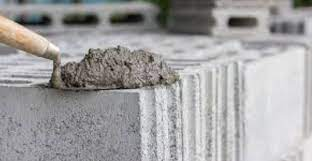
The binding materials used in dry-mixed mortar are mainly inorganic cementitious materials such as cement, lime, and gypsum, including ① ordinary Portland cement; ② high alumina cement; ③ special cement; ④ gypsum; ⑤ anhydrous gypsum. The binding material bonds the aggregate and other granular materials together and plays a significant role in the final strength of the dry-mixed mortar through physical or chemical reactions. In addition, it can divide cementitious materials into hydraulic and non-hydraulic. The former usually hardens in water, and the other hardens in the air.
The hardening of cement and slaked lime binding materials occurs through chemical reactions. The cement reacts with water during mixing, while slaked lime (without a hydraulic hardening component) sets by reacting with carbon dioxide in the atmosphere. Gypsum coagulates by physical reaction with the organic agglomerate, recrystallizes with water, and forms matt acicular crystals, while the organic agglomerate comprises a homogeneous polymer film.
2. Inorganic Adhesive
Cement dry-mixed mortar mainly uses ordinary Portland cement, which forms calcium silicate hydrate through hydration. This substance can maintain strength and stability even in water (hydraulic cementitious material). While ordinary Portland cement is strong enough for dry-mixed mortars such as masonry mortars, plastering mortars, stuccoes, and other mortars, higher-grade cement should be used in tile adhesives. Typically use white Portland cement for most decorative dry-mixed mortars like mortars and caulking compounds. The rapid-hardening high-alumina cement is mainly composed of calcium aluminate and is primarily used in dry-mixed mortar that requires rapid-hardening properties or high-temperature stability.
(1) Cement dry-mixed mortar mainly uses ordinary Portland cement, which forms calcium silicate hydrate through hydration. This substance can maintain strength and stability even in water (hydraulic cementitious material). While ordinary Portland cement is strong enough for dry-mixed mortars such as masonry mortars, plastering mortars, stuccoes, and other mortars, higher-grade cement should be used in tile adhesives. Typically use white Portland cement for most decorative dry-mixed mortars like mortars and caulking compounds. The rapid-hardening high-alumina cement is mainly composed of calcium aluminate and is primarily used in dry-mixed mortar that requires rapid-hardening properties or high-temperature stability.
(2)In contact with water, Calcium sulfate hemihydrate in gypsum and anhydrite harden by forming calcium sulfate dihydrate. Calcium sulfate hemihydrate exists in two crystalline forms (depending on the production process): one has larger crystals, higher tensile and compressive intensity, and an α state with lower water demand; the other has a more porous β state with high, lower tensile and compressive strength and three times higher water demand. In general, gypsum-based dry mix mortars for caulking contain β-hemihydrate gypsum.
(3)Hydrated lime is hardened by reacting with carbon dioxide to form calcium carbonate, so hydrated lime is not a hydraulic cementitious material. Instead, the hydraulicity of some hydrated lime comes from hydraulic impurities or admixtures with pozzolanic properties. Nevertheless, for centuries, hydrated lime has been the essential mortar using cementitious material. However, with the advent and development of modern cement, lime has been gradually replaced because cement is a faster-hardening hydraulic cementitious material, is convenient to use, and performs better. Now, hydrated lime is still used to a certain extent at present. Due to its good plasticity, it can add hydrated lime with a mass percentage of 5% to 30% to the cement to improve the construction performance of dry-mixed mortar.
3. Organic Adhesive
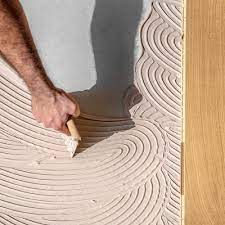
It is well known to improve the properties of cement-based mortars by using organic binders. For example, in ancient times, people used milk and blood proteins mixed into mortar to enhance performance. Today, in most building construction applications, mortars that have yet to be modified with organic polymer adhesives have been challenging to meet the requirements of modern construction techniques. For example, if only methyl cellulose ether is added to the mortar, it can improve the water retention capacity and construction performance. However, due to the insufficient cohesive force of the mortar, it is difficult to bond to the materials used in the modern construction industry (such as polystyrene board, fiber cement board,and non-absorbent substrates such as old and vitrified tiles).In addition, cement mortar is a rigid, brittle material and lacks flexibility.
In many cases, building construction requires using flexible, deformable mortar. Therefore, for many construction applications in the modern construction industry, it is necessary to modify the mortar with polymers to meet the construction requirements of new building materials. In the two-component bonding system, the inorganic bonding material cement and the polymer adhesive (mainly redispersible polymer powder) are mixed and used to complement each other. This combination makes the dry-mixed mortar have excellent properties that any single adhesive cannot obtain.

 Research on various Drymix mortar additives
Leave a comment